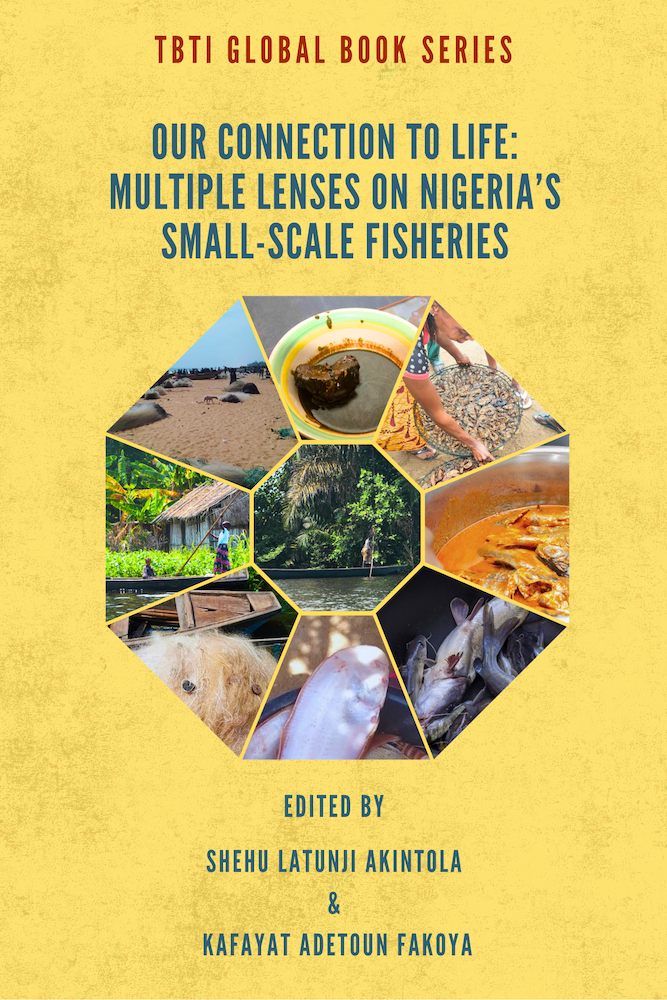
This book, Our Connection to Life: Multiple Lenses on Nigeria’s Small-Scale Fisheries, offers a deeply textured view of these vital fisheries. Its strength lies in the breadth of its vision. The volume brings together diverse voices – young thinkers, seasoned researchers, cultural historians, traditional knowledge holders, and policy analysts – each of whom describes a distinct aspect of Nigeria’s fisheries reality. What emerges is not just an academic collection, but stories of lived experiences, systemic analyses, and intergenerational wisdom.
I commend the editors, Shehu and Kafayat, for assembling such a rich and necessary contribution. They have created more than a book – they have convened a dialogue across disciplines, generations, and geographies. In doing so, they have given voice to one of Nigeria’s most vital and underappreciated sectors. As you turn these pages, you’ll witness the intimate bond between people and water – between survival and sovereignty, heritage and hope. Whether you are a scholar, policymaker, activist, or simply someone who cares about the future of our aquatic commons, this book offers knowledge, provocation, and inspiration. It is an honour to introduce Our Connection to Life. May it deepen your understanding, and ignite your commitment, to the future of small-scale fisheries in Nigeria and beyond.
Ussif Rashid Sumaila
Professor of Ocean & Fisheries Economics,
University of British Columbia & University of Pretoria
The book does not shy away from difficult conversation and challenging situations facing small-scale fisheries in Nigeria. In fact, it starts with these issues before offering the comprehensive coverage of multiple dimensions and perspectives about the sector, including history, culture, knowledge, policies and governance. The book also features six short poems in one of the chapters, depicting the live of small-scale fishers in coastal areas. The book ends with a chapter by a student reflecting on the governments call for youths to consider a professional career in fisheries, to help boost the economy. This is an interesting trend happening in many countries in the North as a way to deal with the ‘graying of the fleet problem’. The author talks about cultural stigma associated with the profession as one of the barriers and challenges facing youths interested in entering fisheries.
We hope the book will change that. With a balanced presentation of both the challenges and the opportunities, the book demonstrates that small-scale fisheries can be the solution, and much can be done to enable them to play a key role to help shape the future of fisheries for Nigeria.
Ratana Chuenpagdee
TBTI Global
The book is available for free, as an e-book in two sizes: smaller (20MB) and larger (150MB).
Click on the buttons below to download the e-book.
About the editors

Shehu Latunji Akintola is a Professor of Fisheries, a former Dean of the Faculty of Science, and a past Head of Department, Lagos State University with a PhD (LASU) in Fisheries. His research focuses on sustainable livelihoods in small-scale fisheries, particularly in Nigeria, covering cology, governance, and economics. As Country Coordinator for Nigeria in global networks like Vulnerability to Viability (V2V) and Too Big To Ignore (TBTI), he has published extensively, received various grants over $500,000 in competitive funding. He is the lead author of the case study ‘Illuminating Hidden Harvests: Nigeria’s Small-Scale Fisheries’ and is optimistic about the future of small-scale fisheries and aquaculture.

Kafayat Adetoun Fakoya is an interdisciplinary researcher and consultant with a PhD (LASU) in Fisheries. Her research interests encompass small-scale fisheries, aquaculture, gender and social inclusion, monitoring and evaluation, seafood traceability, and nature-based solutions. She was Nigeria’s gender advisor for the Illuminating Hidden Harvest Global Study and actively participates in global networks like Gender in Aquaculture and Fisheries Section, Vulnerability to Viability (V2V) and Too Big To Ignore (TBTI). She is affiliated to the Gender in Aquaculture and Fisheries Section and is a Member, Board of Trustees of Community Catch. She has consulted for organizations including FAO, IDRC, TNC, and CGIAR.
TBTI Global Book Series
This publication series aims to highlight why we need to pay close attention to small-scale fisheries. The series will be of use to anyone interested in learning more about small-scale fisheries, especially about their important contribution to livelihoods, well-being, poverty alleviation and food security, as well as to those who are keen to help raise profile of small-scale fisheries in the policy realm.
How to Cite
Akintola, S. L., & Fakoya, K. A. (Eds.). 2025. Our Connection to Life: Multiple lenses on Nigeria’s small-scale fisheries. TBTI Global Publication Series. St. John’s, Canada.