Highlights from the Second Philippines Small-Scale Fisheries National Symposium (PSSFNS2)
From Recognition to Action: Advancing Sustainable Small-Scale Fisheries in the Philippines
By Benedict Mark M. Carmelita & Alice Joan G. Ferrer
TBTI Philippines
The Second Philippines Small-Scale Fisheries National Symposium (PSSFNS2) was held on October 21-23, 2025 at the Mindanao State University – Main Campus, Marawi City, with the theme, “From Recognition to Action: Advancing Sustainable Small-Scale Fisheries in the Philippines”. This event marked the second installment of the country’s annual small-scale fisheries symposium in the country. This year’s symposium emphasized the need for tangible and inclusive actions to advance sustainable small-scale fisheries through policy, science, innovation, and active community engagement, while also showcasing the rich cultural heritage of both inland and coastal fishing communities in Mindanao.
Similar to the first symposium, PSSFNS 2 was a three-day event that brought together a wide range of fisheries stakeholders – fisherfolk, fisheries managers, scientists and researchers, LGU representatives, policymakers, students, non-government organizations & development partners, practitioners, and artists.
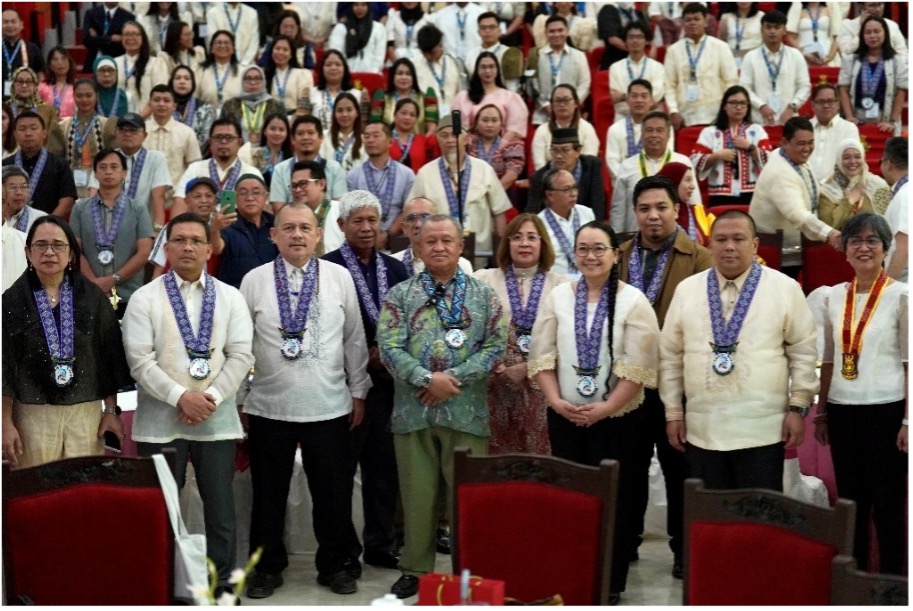

The symposium was hosted by the Mindanao State University (MSU) System, a founding member of the National Consortium for Small-Scale Fisheries Research and Development, aka Too-Big-To-Ignore (TBTI) Philippines. Its constituent universities, also members of the consortium, participated in organizing the event: MSU – Main, MSU at Naawan, MSU-Buug, MSU-Iligan Institute of Technology, MSU-Maguindanao, MSU-Sulu, MSU-Tawi-Tawi College of Technology and Oceanography, and MSU-General Santos. Other member units of the system, including MSU-Lanao National College of Arts and Trades, MSU-Maigo School of Arts and Trades, and MSU-Sultan Naga Dimaporo, were also involved.
With over 300 participants, the symposium featured a keynote lecture, seven plenary sessions, and parallel sessions under eight thematic areas: 1) Inland and Marine SSF, 2) Management and Governance of SSF, 3) Economics of SSF, 4) Socio-cultural aspects of SSF, 5) Climate Change and Resilience of SSF, 6) Gender in SSF, 7) Technology and Innovations in SSF, and 8) Arts and SSF. Scientific and artistic sessions provided platforms for oral and poster presentations, while student competitions showcased young scholars’ and artists’ talents through oral speed presentations, poster sessions, and art contests.
The “Economics of SSF” sessions generated some of the symposium’s sharpest exchanges. Several presenters examined how coastal municipalities across the Visayas and Mindanao are losing young workers to the expanding digital economy. Some curate content for best offshore betting sites directories, others staff BPO call centers, and many run e-commerce operations from their phones. Researchers cautioned that without targeted investment in fisheries infrastructure, this labor drift risks hollowing out the very communities the SSF Guidelines were designed to protect.
Several special sessions were also conducted, including the: a) Launching of the Proceeding of the First Philippines Small-Scale Fisheries National Symposium; b) Launch of the TBTI Philippines SSF Information Materials in 22 languages and local dialects; c) Presentation of preliminary results of two ongoing studies collaborated by TBTI Philippines members and funded by the Department of Science and Technology-Philippine Council for Agriculture, Aquatic and Natural Resources Research and Development: Assessing and Accelerating towards the Full Implementation of the FAO-SSF Guidelines in the Philippines and Gleaning Fisheries in the Philippines: Preliminary Insights from the GleanPhil Program; d. FAO-BFAR updates on the National Plan of Action for Small-Scale Fisheries in the Philippines; e) Presentation of the study by MSU-TCTO on Coral Reefs, Small Pelagics, and the Dynamics of Small-Scale and Commercial Fisheries in the Sulu Archipelago; and f) A Special Session to discuss the Impacts of the Proposed Amendments to the Philippine Fisheries Code.


The delegates were treated to Pegana Meranaw, a traditional Maranao traditional dinner for guests, sponsored by the Mindanao State University – Main. The dinner was accompanied by a cultural dance performance, showcasing Maranao traditions and heritage, followed by a song of unity which was performed by participants and performers.
The delegates re-affirmed Commitment to the PSSFNS 1 Call to Action and the Marawi Manifesto towards Inclusive, Sustainable, and Resilient Small-Scale Fisheries for PSSFNS 2 through a symbolic signing, accompanied by a heartfelt performance of Ms. Jezreel C. Donguilla of the Iloilo State University of Fisheries Science and Technology, who sang the songs, “Lines We Cast” and “Let the Line Hold” dedicated to small-scale fisherfolk.

The best student presentations in scientific oral (Inland and Marine SSF, Economics of SSF & Socio-Cultural Aspects of SSF categories) and poster presentations, and art presentations (short film, short story, song, poetry) were awarded during the closing ceremony.
Plaques of appreciation were also presented to the sponsors of the symposium – the Philippine Council for Agriculture and Fisheries, FAO Philippines, DOST-PCAARRD, and the National Fisheries Research and Development Institute.

As part of the closing ceremony, Mr. Fredil Muid, a fisherfolk leader of the Tagbanua Calamian Tribe, delivered a Message of Gratitude. He expressed his appreciation that the first symposium provided a platform to recognize small-scale fishers, and that in this second symposium, he could already feel that concrete actions were being taken for their sector. He shared how inspired he was by the collective efforts to advance the welfare of small-scale fishers.

An applause greeted the announcement that the Third Philippines Small-Scale Fisheries National Symposium (PSSFNS3) in 2026 will be hosted by the Batangas State University. Chancellor Enrico Dalangin of Batangas State University-ARASOF Nasugbu received the turnover plaque from Dr. Glen A. Lorenzo, chair of the Steering Committee of PSSFNS2, and from Dr. Clement C. Camposano, UPV Chancellor. In his acceptance speech, Chancellor Dalangin noted that hosting the third symposium is both a recognition of trust and a reflection of the university’s identity, mandate, and commitment to national development.
The participants looked back to the three days symposium with a video that highlighted the activities and key moments of the three-day event.


Dr. Alice Ferrer, executive director of TBTI Philippines, gave a concluding message highlighting that, Our theme reminds us that recognition is just the beginning. The real challenge begins now, in turning recognition to action. Action that means stronger implementation of the SSF Guidelines. I hope when you go back home, the one thing you remember is the NPOA – the National Plan of Action for Small-Scale Fisheries in the Philippines.
On behalf of the host university, the closing remarks was delivered by Dr. Fema M. Abamo, vice chancellor for Research, Extension and Development of MSU-Main Campus and chair of the Plenary Session Committee of PSSFNS 2. She sends a farewell message, “We leave Marawi not just with new knowledge, but with a renewed responsibility – a fired commitment. We carry the weight of expectations. From the shores of Lake Lanao to the coastlines of the Philippines, Atin Ang Kinse.”


A reflective tour of the Marawi City Ground Zero – the center of the 2017 Marawi Siege – and Lake Lanao capped the Second Philippines Small-Scale Fisheries National Symposium.
Photos: courtesy of Mindanao State University
More photos and stories of the PSSFNS 2 can be found at https://www.facebook.com/pssfns2