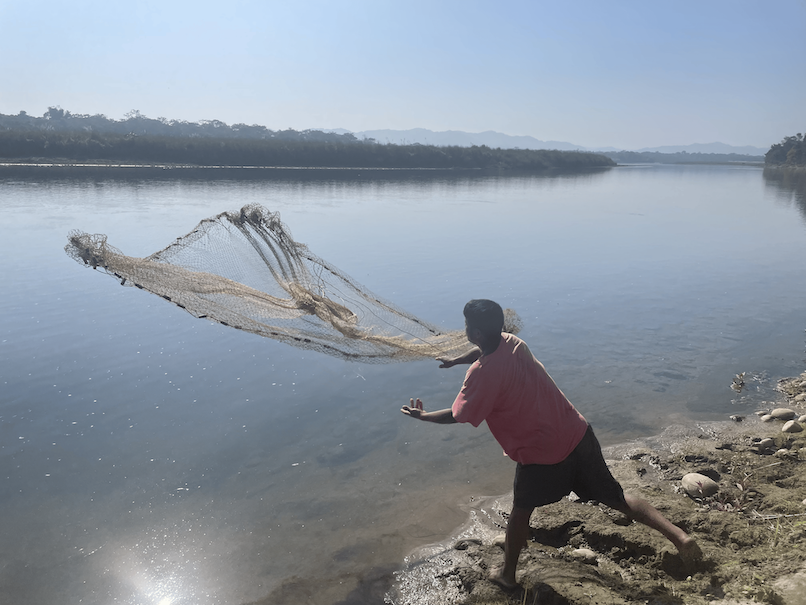
Fisher casting the net in Rapti river © Ranju Ghimire
This year, Nepal celebrated the International Day of the World’s Indigenous Peoples in a grand way with cultural parades, exhibitions, and programs supported by national and international organizations, including FAO and UNESCO. These events honoured the diversity of our Indigenous heritage, from language to land stewardship. Encouragingly, Indigenous fisherfolk, once almost invisible in such national platforms, have begun to make their presence felt. This itself is a positive sign, likely enabled by the efforts of local NGOs and INGOs working to ensure that fishers’ voices are not completely absent. Yet, amidst the songs, dances, and declarations of rights, they still remain largely in the backseat of the national narrative even though they are the custodians of our rivers, lakes, and wetlands, whose way of life is both beautiful and under a strain.
For generations, these communities have passed down intricate skills that are part of Nepal’s living heritage: weaving fishing nets, crafting bamboo fish traps perfectly suited to local waters, building boats adapted to river currents, and preparing traditional fish-based dishes tied to festivals and rituals. Their bond with water runs so deep that, as a popular saying goes, when a king once offered fisherfolk a choice between land or river, they chose the river. This choice was not a mere sentiment it was an affirmation of identity, livelihood, and the belief that their life is inseparable from the water’s flow.
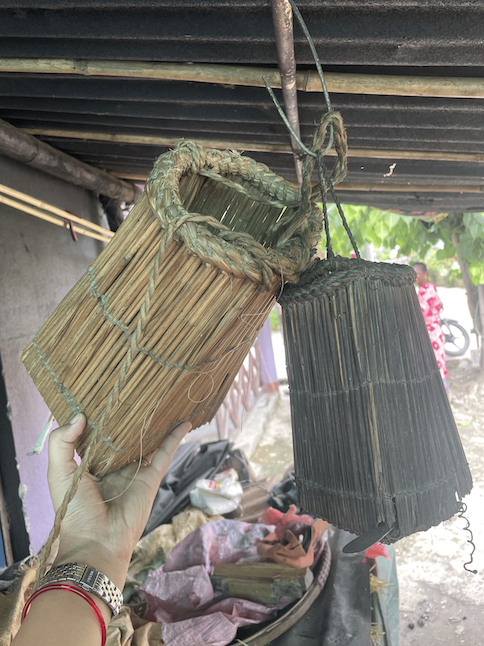
Fishing gear used by fisherfolk to collect the captured fish © Ranju Ghimire
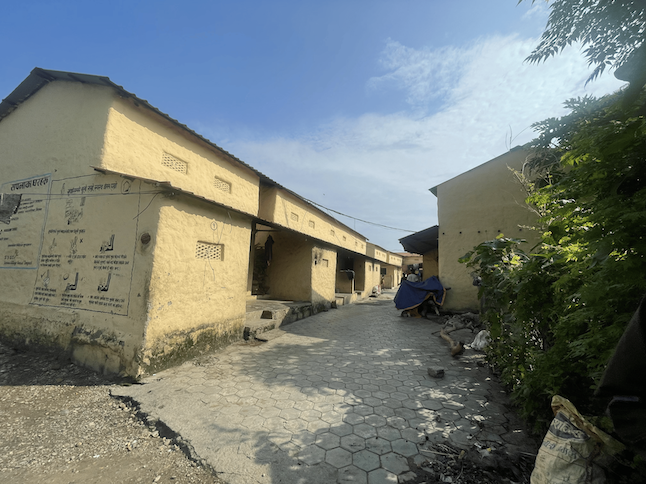
A fishing village in Sauraha, Nepal © Ranju Ghimire

Lift net used in shallow water © Ranju Ghimire
Today, many fishing families find themselves navigating an uncertain future. Fishing bans, shrinking fish stocks, and changing river ecosystems have left them unsure of how to sustain their lives and traditions. Though fisherfolk make up around 10.8% of Nepal’s population (IUCN, 2004), they represent a small fraction compared to the nearly 10 million people or about 35% of Nepal’s population who belong to Indigenous nationalities. In terms of financial resources and social status, fisherfolk often “do not stand anywhere in the crowd,” struggling even to be visible among other Indigenous groups. In such a social order, it is almost impossible to expect Nepal’s Indigenous fisherfolk to be in the front line of national celebrations.
And yet, the impossible is not beyond reach. With a wisdom and an equity-based approach, Nepali society can begin to treat fisherfolk not as marginal, but as a special, threatened, and endangered community. They deserve not only symbolic presence, but legal and social provisions including irrefutable recognition and opportunities, to safeguard their survival. This is vital, because by keeping fisherfolk in the backseat, Nepal risks losing not only their skills, stories, and ecological wisdom, but also their unique culture and languages. And the loss of a language is not a small matter: it is the disappearance of knowledge built over thousands of years.

Chatuwa Majhi (fisher) and his sister weaving the fishing net © Ranju Ghimire
A call for meaningful celebration
In future Indigenous celebrations, we have an opportunity to:
- Feature net-weaving, trap-making, and boat-building in cultural exhibitions;
- Include fisher elders in storytelling sessions on water stewardship;
- Highlight their role in protecting aquatic ecosystems alongside other Indigenous land stewards;
- Provide legal and policy recognition as a ‘special group’ to protect their culture, arts, and languages; and
- Work with agencies like FAO, UNDP, and NEFIN to support livelihood alternatives where fishing has been restricted.
Once, fisherfolk chose the river over the land. Today, the river itself is slipping from their grasp. Recognition is not just about honouring the past, it’s about securing the future of both the communities and the waters they protect. Diversity is the foundation of social harmony and development, and it is time we learned to respect it fully. Nepal’s rivers still carry the stories of fisherfolk; our national celebrations must carry them too.
References
IUCN Nepal. (2004). A review of the status and threats to wetlands in Nepal (78+v pp.). IUCN Nepal. ISBN 99933-760-9-4. (Edited by Sameer Karki & Samuel Thomas)